
FFRF student activist award: Treaty of Tripoli proves we live in secular state
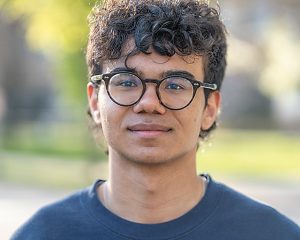
Malik Boyd received a $2,000 scholarship from the Freedom From Religion Foundation, through the Robert G. Ingersoll Student Activist Award, named for the 19th century’s most illustrious freethought advocate, set up by FFRF member John Pusey. FFRF thanks Mr. Pusey for his generosity, making possible Malik’s participation in the “We the People” competition in Washington, D.C.
By Malik Boyd
I had the opportunity to represent Wisconsin on the national stage in the “We The People: The Citizen and the Constitution” civic education competition from April 13–16. My class from Wauwatosa East High School was one of two Wisconsin teams competing. Each team has six “units” that specialize in different curricular topics ranging from political philosophy to contemporary challenges to democracy. The competition simulates a congressional hearing. Three “hearing questions” are distributed months ahead of the competition. Every unit must read a four-minute prepared response to each question, followed by a thoughtful discussion with a panel of expert judges on matters relating to the topics.
I am a member of Unit One, which specializes in the philosophy of the Constitution and colonial American governance. During the state-level competition, one of our hearing questions was “How did the Protestant Reformation contribute to developing political thought and governance in colonial America?” Although not directly mentioned in our statement, one document I discovered to be fascinating and useful in supporting our claim was the 1797 Treaty of Tripoli. The treaty secured the safety of American commercial shipping in the Mediterranean, and established a more amicable relationship between the young nation and the Barbary states.
However, what is of most importance to not only my research, but American history as a whole, is Article 11 of the treaty, which states: “The government of the United States of America is not, in any sense, founded on the Christian religion; as it has in itself no character of enmity against the laws, religion, or tranquility, of [Muslims].” It establishes, in plain language, that we live in a secular, pluralistic state. America is not only a country that welcomes a variety of Christian denominations, but also one that welcomes Islam, among other beliefs. Interestingly, the Treaty of Tripoli was approved unanimously in the Senate — although there are some who claim the Senate was unaware of Article 11 — highlighting that this was an accepted truth even during the Constitution’s infancy. Only five years later, Thomas Jefferson would write his famous letter describing the “wall of separation between church and state.”
The “We the People” competition truly has been life changing, and the best educational experience of my life. Civics education is fundamental to any nation, and especially our Great Experiment. Next year, I will serve as a teacher’s assistant in the “We the People” program at Wauwatosa East, with the goal of furthering civics education and passing the “We the People” torch to my younger peers.
I would like to thank my teacher, Mr. Aronow, for his devotion to our class, and my close friends and Unit One mates, Julia Fossum and Felix Gilgannon, for sharing this journey of civic learning with me. Finally, I would like to thank the Freedom From Religion Foundation and Mr. Pusey for their generosity in covering my full travel costs to the national competition.
Malik writes: “I am 17 years old and a junior at Wauwatosa East High School. Since early elementary school I have been fascinated by history and government. My passion for both subjects has grown during the past decade. I am the junior class president and a member of the Student Council. I also have a deep love for the German language. I am a member of the German Honor Society and the social media manager for my school’s German Club. Additionally, I am an editor for my school district’s newspaper, The Tosa Compass. I plan to earn a bachelor’s degree in either economics or political science, and to later attend law school.”
