
1st place: FFRF Law School Student Essay Contest — Michael O’Key
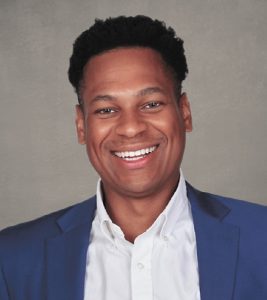
By Michael O’Key
The tension between religious liberty and anti-discrimination requirements in school voucher programs represents a critical national challenge with profound implications for educational equity and civil rights. Nowhere is this tension more evident than in North Carolina, where the recently expanded Opportunity Scholarship Program serves as a compelling case study in how seemingly neutral policies can perpetuate systemic barriers to educational opportunity.
In 2023, through legislation codified at N.C. Gen. Stat. 115C-562.1, North Carolina committed approximately $4 billion in public funding to private schools over the next decade — a massive investment that threatens to exacerbate rather than ameliorate educational inequities.
The state’s historical experience with segregation academies, combined with its current minimal oversight of participating religious schools, presents an urgent example of how voucher programs can reinforce patterns of educational segregation under the guise of expanding choice.
Historical context
Following Brown v. Board of Education (1954), North Carolina witnessed a proliferation of private religious schools explicitly established to maintain racial segregation. As documented in state archives and contemporary scholarship, these “segregation academies” operated under the banner of religious freedom while receiving various forms of public support to facilitate white flight from integrating public schools.
By 1970, North Carolina had seen a 95 percent increase in private school enrollment, with most of these schools being religiously affiliated institutions serving predominantly white students.
The structural mechanisms that enabled segregation academies to perpetuate educational inequality find stark parallels in today’s voucher program. Despite its facially neutral presentation, the current program perpetuates barriers to access through minimal oversight of participating schools. Under N.C. Gen. Stat. 115C-562.5, these institutions face virtually no accountability requirements regarding curriculum, teacher qualifications, or student outcomes.
They retain broad discretion to deny admission based on various criteria, including religious beliefs, academic performance, disciplinary history, and family characteristics.
The program provides no transportation support, effectively excluding many low-income families who cannot arrange private transportation across North Carolina’s sprawling school districts.
Constitutional framework
Recent Supreme Court decisions require careful analysis to understand their scope and limitations relative to anti-discrimination requirements. While Carson v. Makin (2022) and Espinoza v. Montana Department of Revenue (2020) prevent excluding religious schools based solely on their religious identity, these rulings do not create a constitutional right to receive public funds while engaging in discrimination. Chief Justice Roberts, writing for the majority in Carson, explicitly noted that the decision addresses only “discrimination based on religious identity” — not religious use.
“The court emphasized that states may still impose neutral, generally applicable requirements on all funding recipients.
The foundational case Bob Jones University v. United States (1983) provides compelling support for states’ authority to condition public benefits on compliance with anti-discrimination requirements.
The Supreme Court unequivocally held that religious institutions have no constitutional right to receive public benefits while maintaining discriminatory practices. Chief Justice Burger’s majority opinion declared that “not all burdens on religion are unconstitutional” and emphasized that the government’s fundamental interest in eradicating racial discrimination in education “substantially outweighs whatever burden denial of tax benefits places on petitioners’ exercise of their religious beliefs.”
This principle takes on renewed urgency in the context of North Carolina’s voucher program, where public funds directly subsidize institutions that may exclude or discriminate against already marginalized students.
This authority gains additional force from Employment Division v. Smith (1990), where Justice Scalia, writing for the majority, affirmed that the Free Exercise Clause does not relieve individuals of the obligation to comply with “valid and neutral law[s] of general applicability” simply because they run counter to religious practices. Even the Court’s recent decision in Fulton v. City of Philadelphia (2021) maintained this basic framework, turning on the presence of a system of individualized exemptions rather than rejecting the validity of neutral, generally applicable requirements.
Educational segregation
North Carolina’s voucher program operates with remarkably little oversight compared to other states’ programs.
The Department of Public Instruction’s own data reveals troubling patterns: participating private schools serve disproportionately fewer students with disabilities (only 3.2 percent compared to 13.1 percent in public schools), English language learners (less than 1 percent compared to 8.9 percent), and students from low-income families.
This disparity stems directly from the program’s structural flaws — specifically, N.C. Gen. Stat. 115C-562.2(b) allows schools to require substantial tuition payments above the voucher amount and provides no support for essential services.
The practical effects of these policy choices become clear in the geographic distribution of participating schools and the barriers facing potential students. A comprehensive analysis of program participation reveals that private schools cluster predominantly in more affluent areas, creating “education deserts” in lower-income and rural communities.
The absence of transportation support, combined with North Carolina’s expansive school districts, effectively places participating schools out of reach for many families who cannot arrange private transportation. Schools may require additional fees for books, materials, uniforms, extracurricular activities, technology, and application processing — costs that can amount to thousands of dollars beyond the base tuition. These financial barriers, though facially neutral, disproportionately impact students of color and low-income families, effectively replicating patterns of segregation through economic means.
Applied to North Carolina’s voucher program, established Supreme Court precedent provides clear authority for imposing anti-discrimination requirements on participating religious schools. Such requirements would not target religious institutions for disfavored treatment but would represent neutral conditions advancing compelling state interests in educational equity. As the court noted in Norwood v. Harrison (1973), “discriminatory treatment exerts a pervasive influence on the entire educational process,” making state efforts to prevent such discrimination particularly compelling in the educational context.
North Carolina possesses broad authority to condition voucher participation on compliance with comprehensive anti-discrimination requirements. The state can and should mandate that participating schools address discrimination across multiple dimensions: race, ethnicity, religion, disability status, sexual orientation, gender identity, and family structure.
Such requirements find firm support in both federal precedent and North Carolina’s own constitutional obligations under Article IX, Section 2(1) of the North Carolina Constitution, which guarantees the right to a “sound basic education” to all children. The North Carolina Supreme Court’s landmark decision in Leandro v. State (1997) emphasized that this right extends to all students, regardless of their geographic location or socioeconomic status.
Necessary reforms
North Carolina must implement comprehensive oversight mechanisms to prevent its voucher program from facilitating modern forms of educational segregation. The state should amend N.C. Gen. Stat. 115C-562.5 to require that participating schools demonstrate compliance with rigorous academic standards, including mandatory reporting of student achievement data, teacher qualifications, and curriculum alignment with state educational goals.
Empirical research from other states demonstrates that strong accountability measures significantly improve educational outcomes for historically marginalized students in voucher programs.
Most critically, the state must address the practical barriers that currently exclude many of its most vulnerable students. This means requiring participating schools to provide transportation assistance, limiting additional fees beyond the voucher amount, and mandating support services for students with disabilities and English language learners.
The current system’s failure to provide these basic supports has created what one federal court described in a similar context as “a modern form of separate but equal.”
Conclusion
The North Carolina case illuminates a fundamental tension in voucher programs across the United States: balancing religious liberty with the imperative to prevent public funds from enabling discrimination in education. The state’s experience demonstrates how voucher programs, without proper safeguards, risk transforming the laudable goal of educational choice into a mechanism for perpetuating educational segregation through more sophisticated and less overt means.
With minimal oversight and accountability measures, the state’s Opportunity Scholarship Program exemplifies how the absence of anti-discrimination requirements can effectively recreate segregation academies with public funds, merely cloaked in the modern language of choice and religious freedom.
The constitutional principles at stake extend far beyond North Carolina’s borders. While Carson prevents religious status discrimination nationwide, it does not — and cannot — preclude states from ensuring that public education funds serve truly public purposes.
As more states expand their voucher programs, North Carolina’s experience offers a crucial warning about the necessity of robust oversight and anti-discrimination requirements. The fundamental question is not whether religious schools can participate in public funding programs, but whether states can allow any school, religious or secular, to receive public money while engaging in discriminatory practices that undermine the core promise of equal educational opportunity.
The answer must be no. States not only possess the constitutional authority to impose meaningful accountability measures but have a compelling interest — indeed, a moral obligation — to do so.
The alternative, exemplified by North Carolina’s current approach, risks using billions in public funds to subsidize and legitimize educational segregation under the guise of choice. At stake is not just the integrity of public education funding, but the fundamental promise of equal educational opportunity that has animated civil rights struggles for generations. Without immediate reform, North Carolina’s voucher program threatens to unravel decades of progress toward educational equity, creating a state-funded system of separate and unequal schools that betrays our highest constitutional and moral principles.
Michael O’Key is a first-year law student at UCLA School of Law, where he is a Public Interest Law Fellow, and a fourth-year Ph.D. candidate student in education at Stanford University. Michael holds an M.A. in sociology from Stanford, a Master of Regional Planning from Cornell University, a B.A. in public administration from Auburn University, and a B.S. in environmental design from Auburn University. In 2020, Michael was appointed by North Carolina Gov. Roy Cooper to serve on the Juvenile Justice Planning Committee of the North Carolina Governor’s Crime Commission.
