
PJ Slinger: Why doesn’t God reveal itself to humans?
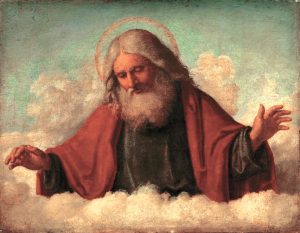
By PJ Slinger
The religious person’s mindset has always been an enigma to me in the way that they can contort reality to fit their worldview. I’ve listed a few questions I have and tried to come up with the most plausible explanations.
Why doesn’t God reveal itself to humans in a way that can be verified and documented?
Basically, why is God hiding?
Believers say it’s because God wants to find out who the truly faithful are. It takes faith to believe in something you can’t see or hear or even prove to exist. God apparently wants those kinds of people, those who can be convinced to believe without facts or evidence. But, since God is allegedly omniscient, doesn’t it already know who the true believers are? Why all the secrecy?
Really, though, it’s the churches that want those people, because who would tithe 10 percent of their income if they knew they were being hoodwinked? So, the churches continue to peddle the idea that faith is the ultimate (and impossible to disprove) way into God’s heart.
But, if God really wants to make believers out of people, it could just show us in no uncertain ways. Why is faith the crucial ingredient?
If God truly wanted every human to know it was real and powerful and just and benevolent, it could easily show us without ambiguity. It could end world hunger in a flash by making food plentiful and readily available to every human, no matter where they live. Or, using his superpowers as an omnipotent being, he could just allow all humans (and all life forms) to survive without the need for sustenance. Might as well eliminate pain and suffering, too. Now, that would be credible evidence of a god.
Of course, we all know the reason it doesn’t reveal itself . . . because it doesn’t exist.
Where do people draw the line at what supernatural entity they believe in?
A recent poll shows that 70 percent (!) of adults in the United States believe in angels. That’s crazy to me. Even crazier, 2 percent of atheists, 25 percent of agnostics and 50 percent of those identified as “nothing in particular” believe in angels. What?
Almost half of the population believes in ghosts, despite zero evidence. If there were actual evidence (not just some paranormal hunters getting some electromagnetic readings in an old house), it would be trumpeted across the globe, just as if there was real evidence for God or whatever other beings are out there in people’s imaginations.
What about leprechauns, trolls and gnomes? People don’t believe in them, at least not in the same way or levels they believe in angels or ghosts. But why not? What is different about the makeup of a ghost that makes believing in it credible versus that of a gnome? Why would a person believe in angels but not trolls?
My guess is that it’s because angels and ghosts are invisible (just like God!), whereas trolls and gnomes and leprechauns are all (allegedly) material beings. It’s much easier to say an invisible (and silent) being is real when there is absolutely no way to disprove it.
What about a magician? Do people really think a magician is doing things outside the laws of our universe? I doubt that many people believe that the magician is actually doing some paranormal activity when he pulls a rabbit from a hat or saws a woman in two. They know the magician is just doing some form of sleight of hand or something that can be explained through rational reasons.
So, why don’t these same people use those reasoning powers to reject other paranormal or superstitious beliefs?
Why do believers think having the “fear of God” is a positive quality?
Christianity.com says that fearing God means “both bowing in utter reverence and respect before the One who created the world and all things in it and cowering on trembling knees at the prospect that He could if He so chose, destroy us all in a moment. Fear is rooted both in awe and in terror, and this is not a bad thing. God, the almighty ruler of the universe, is indeed all-powerful. He can create heaven and earth, and we certainly are no match for Him.”
Wow — “Cowering on trembling knees” and “destroy us all in a moment.” I don’t understand how people can be both in awe and terror from the same entity. I guess an abusive parent or spouse comes close to this. Fortunately, I have not been part of an abusive relationship as such, so I can’t speak from experience. But I truly don’t understand how one can be so fearful of someone (God) because of the negative things they can do to you and yet be so awed, appreciative and reverent of that same being.
Why is God not only the creator of universe, but also omnipotent/omniscient/omnibenevolent?
Sure, a god could create an entire universe. But could this god have lesser qualities than the ones bestowed upon it by believers?
Imagine a student in a biology lab who manages to create some form of life — perhaps even by accident. Now, say this life form ends up becoming sentient over time. Would those beings then ascribe to the student such powers as omniscience or omnipotence, when really, it was just a student’s clumsy mixing of chemicals? How do we know the god who created our universe wasn’t just a clumsy student from a different universe?
Well, we know the answer. If you’re gonna worship something, you’d better make sure it’s the best, most powerful god possible, right? I mean, who’s gonna worship a god that spilled some chemicals onto a Petri dish?
Or, what if this god created the universe and then left it to evolve on its own? That certainly seems to be the most robust argument (that incorporates a god), since the way the universe works sure seems as if there is no one guiding it.
Again, the same response works here. Why have a god who is only good enough to create life (or a universe), but isn’t necessarily benevolent or all-powerful or all-knowing? Because without those qualities, another god who does have those qualities would be a “better” god. So you might as well go for the best possible god of all, right?
Why do people think “everything happens for a reason”?
I am dumbfounded whenever I hear someone say this. There are two ways to look at this.
On the logical side, yes, everything does happen for a reason. It’s because of the laws of nature. If I drop a glass, it will fall to the floor and most likely break.
But people don’t say “everything happens for a reason” when someone drops a glass on the floor. They say it when something unexpected happens. Perhaps someone they loved died in a car accident at a young age. Because they can’t fathom losing this person for what amounts to a pure chance occurrence, they wish to believe that it happened for an ultimately good reason, although they admit that that don’t know what that reason is.
It is almost assuredly because that person believes in a higher power (specifically, God), who has a master plan. God has set everything in motion according to its will and the plan is infinite and unchanging.
Because they don’t know the reason why God would let that young person die, they say, “God works in mysterious ways.” Now they have the peace of mind that somehow this person’s death is for the greater good at some level (because God is omnibenevolent) that is beyond the capacity of us mere humans to discern.
Of course, the idea of a universal master plan by God also eliminates the idea of free will. The universe will unfold the way that is preordained, even though it may feel to you like you have agency over your thoughts and movements.
What about those who say there are no such thing as coincidences?
Again, I think anyone who says this is relating it to some higher power. That, or people just don’t understand the laws of probability.
How many times have you thought of someone and then, perhaps even minutes later, that person contacts you or you see them at a random place? Do you immediately think there is some higher power guiding those chance encounters?
But how many times do you think of someone and they don’t contact you or you don’t see them for a significant amount of time? That happens orders of magnitude more often, although you don’t think about it during those times. It’s only when they do pop up in your life shortly after thinking about them that you think there’s a higher power guiding that interaction, when, in reality, it is pure coincidence.
PJ Slinger is editor of Freethought Today.
