
FFRF honorary directors look at the election and its impact
FFRF asked some of its honorary board members to write a few words about the results of the November election and what it means going forward, especially from a nonreligious perspective. The following are their responses.
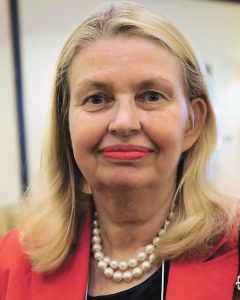
Susan Jacoby
To my fellow members at the Freedom From Religion Foundation:
I wish that I could, in good conscience, derive a ray of sunshine from the 2024 election, but I can’t. Right-wing religion (not all religion) and the misogyny and rejection of science associated with right-wing religion were major issues throughout the campaign.
People did not vote for Donald Trump because of the “kitchen table issues” the media loves to tout. Food cost a lot more during the pandemic than it has this year. One thing I noticed constantly was that no one running against Trump and other Republicans dared to omit obligatory mentions of their faith. I think cultural issues, ranging from all the nonsensical attacks on trans people to book banning, were what really decided this election.
As secular people, our most important task during the next four years must be to put forward the importance of secular morality in our cultural and political life. We don’t try to impose our secular convictions in political life (when was the last time you were invited to a secular version of a prayer breakfast?), but the primary aim of the Trumpists is to impose their beliefs on the rest of America. An examination of Trump’s proposals for his cabinet tells you everything you need to know.
We must see that our point of view — one which draws a bright line between church and state — is, as it always has been, the only way to maintain a decent government. We have to work much harder than we ever have at this vital task. We must realize the peril of the situation in which we find ourselves.
Susan Jacoby is an author of numerous books, including “Strange Gods: A Secular History of Conversion” (2016) and “Freethinkers: A History of American Secularism” (2004).
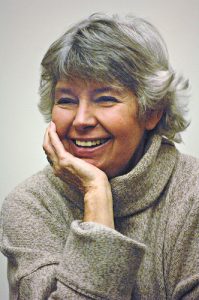
Robin Morgan
What does the election mean for us as nonreligious Americans? Draconic changes to our legal and social systems, already well entrenched with the attacks on women’s reproductive human rights; wide book banning; detentions on faked charges, growing to prison sentences; “voluntary” conversions widely televised (they have the media, remember) combined with “Deity Deniers” being (fill in the blanks:) ostracized, fired, harassed, arrested, imprisoned, killed. A drastic turn to the right on all issues, social, moral, political. A retrenchment and ultimately erasure (again) of feminism’s gains and of women’s rights as an organized movement (although small underground cells will struggle to stay afloat), and the rise of a new worldwide “Age of Manhood.”
I realize my comments sound like science fiction, but everything feels very dark right now. The only scintilla glint of ironic silver I can spy would reside with hubris as my one hope: an overreaching arrogance among the oligarchical male fascists now in charge of our country, turning their egos against each other: Musk vs. Trump, Murdoch vs Bezos, etc. Hubris, a virus common among humans, is usually pretty reliable. It usually ends in war.
Robin Morgan is a poet, writer, activist, journalist, lecturer and former child actor. She has received numerous awards for her activism on women’s rights.
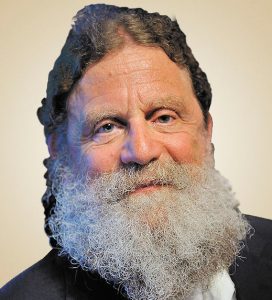
Robert Sapolsky
I used to do field work, studying baboons in a national park in East Africa. One day, I was chatting with a fellow zoologist who had just had a close call with a particularly poisonous snake. Naturally, this led to a discussion about all the truly scary snakes in the vicinity. “You know,” he mused, “If I’m going to get killed by some sort of organism here, I hope at least that it’s a mammal. That would just be more dignified.” I agreed.
Now Trump is back for four more years, something unimaginable when Jan. 6 should have logically consigned him to ignominy and jail. Even though he is slothful by nature and has been made cognitively doddering by time, his reach will still be far and wide with his appointments. And we now must muster the energy and ingenuity to fuel a resistance.
Amid this, I am having a deeply irrational thought which feels, nonetheless, galling. Here is a faux, posturing bible salesman, someone who has soiled so many of the Ten Commandments that evangelicals should have consigned him to hell rather than proclaimed him a messiah, someone who is disinterested in the traditional debate as to whether human decency comes from humans or is gifted to us by a deity — because he is contemptuous of human decency. Somehow it seems preferable, more dignified, if the person who will be laying siege to our values at least believed in some of his intolerant shit.
Robert Sapolsky is an academic, neuroscientist and primatologist. He is the John A. and Cynthia Fry Gunn Professor at Stanford University, and is a professor of biology, neurology and neurosurgery.
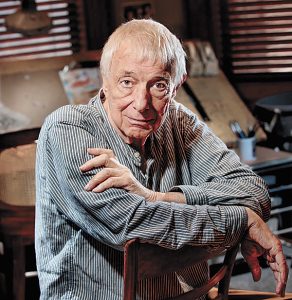
Edward Sorel
In the days and weeks that followed Trump’s election triumph, every pundit on cable news, and every journalist with an op-ed page column, poured forth their different explanations of why Kamala Harris lost. Their reasons varied wildly, but not one of them suggested that religion played a major role in that outcome.
I believe it did. I believe that religious Christians and Jews voted for Trump in greater numbers than before. Zionist Jews (and even a few secular ones) were so alarmed by Biden’s threat to cut off armaments to Israel unless Netanyahu eased bombing civilians in Gaza, that many Jews voted for Trump.
The Catholic Church in 1933 was so outraged by the language used in books and movies, that they formed the National Legion of Decency to decree which were to be avoided. But, in 2024, Catholic priests implored their flock to vote for Trump, a twice-divorced womanizer who uses profanity to flaunt his masculinity. The Church has chosen to overlook Trump’s shortcomings because of the godly work he has done in outlawing abortion.
H.L. Mencken wrote something that seems to fit this moment: “Democracy is the theory that the common people know what they want, and deserve to get it good and hard.”
Edward Sorel is an illustrator, caricaturist, cartoonist, graphic designer and author. His work is known for its left-liberal social commentary, its criticism of right-wing politics and organized religion.
