
2023 BIPOC essay contest honorable mentions

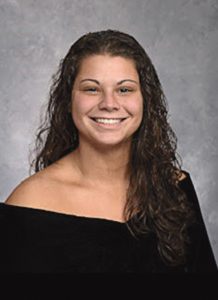
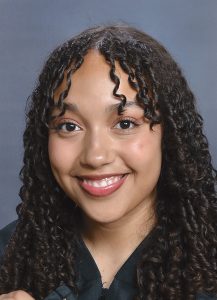

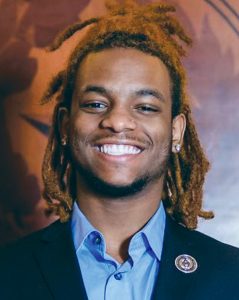
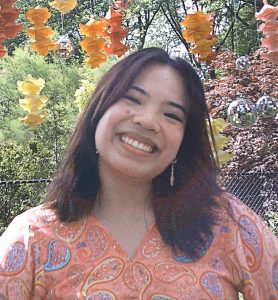
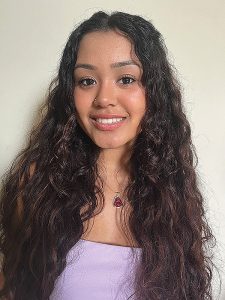
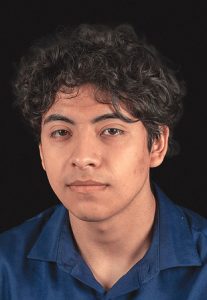
The following are snippets taken from the essays of those who earned honorable mention distinction.
Paolo Bonarriva
Moving through high school, adversities that challenge my identity and my character moved me from a dark place in my life where I saw nothing but the abyss — a depression wherein I found my atheism to be a byproduct. I found myself seeing the beauty of life and love and everything the world can offer me, and in finding my passion in the performing arts, my faith was restored — however, not in any existing sect. I am agnostic now.
To say that I place all my confidence and trust into a higher being would be crazy, but through a belief that favors a personal effort over blind devotion, I find the spirit to truly pursue my own life.
Paolo, 18, is from Frederick, Md., and attends Frederick Community College, working toward an associate’s degree in theater, and a double major in English.
Arianna Cuevas-Galarza
My religion felt like a shadow that haunted me at every corner. I struggled with my identity for many years and Christianity solidified that fear I felt in my soul over who I was and what I wanted.
Once I let go of my religion, I began to enjoy life and see things clearly. Love is light and religion is only a means of subjugation. Since I made this discovery, I have rid myself of the darkness and the shadows and freed myself from the shackles of eternal damnation. With no fear of inevitable doom, I was able to let in the light that guides me to my eternal happiness.
Arianna, 18, is from Wilmington, N.C., and attends the University of North Carolina, with plans to major in English on the pre-law track.
Kayla Garcia
How could I worship a god that allows for the abuse of children or calls for the death of homosexuals? I refuse to give my body and soul to a man who condemns me to hell simply because I am not heterosexual. My body, my lifestyle, and support is for me to give. No one can tell me who or what I need to believe in.
I don’t care where I go once I die, I care about actively changing and helping people while on Earth.
That’s why I am proud to be godless. I focus on the here and now.
Kayla, 18, is from Naperville, Ill., and attends the University of California-Irvine.
Aija Keyes
From an early age, I have always had a logical outlook on the world, and I have never subscribed to the notion that God exists in any form or fashion.
Although I had never believed in God before, my experiences during my Christian middle school years reinforced my lack of faith. After considerable persuasion, my parents agreed to allow me to attend a public high school. The world opened to me once I began attending public school. This was the first time in my life that I truly felt liberated from religion.
Aija, 19, is from Lauderville, Fla., and attends the University of North Florida, with plans to major in political science.
William McPhail Jr.
Why do Black Americans hold Christianity so dear to their lives, arguably more than white Americans? Is the same God that their enslavers worshipped the same one I worshiped and feared?
To be Black and to be Christian means you have to accept slavery as a necessary circumstance that saved Africans from sin, the same ideology that white nationalists, the KKK and enslavers used to justify slavery to the church.
As I reflect, these heart-wrenching occurrences made me glad to be godless.
William, 19, is from Fort Worth, Texas, and attends Prairie View A&M University, with plans to major in law.
Aditya Mehta
Reason ensures that progress and equality are guided by evidence rather than blind faith, countering discrimination masked as religious practice.
Embracing reason not only liberates individuals from the constraints of superstition, but also empowers them to make meaningful changes in society. By promoting critical thinking and evidence-based approaches, we, as the next generation of leaders, can challenge oppressive systems, fight discrimination and strive for a more equitable future.
Aditya, 18, is from Morrisville, N.C., and attends the University of California-Berkeley, with plans to major in anthropology and data science.
Jastell Puente
The deconstruction of my faith began when I started to understand the unfair ways Christianity was being utilized against others. Many people are suffering because of the way Christians interpret the bible. Sexual orientation, gender identity and body autonomy are all under attack in America.
I took some time to reflect about whether it was better to believe in God out of fear, or to refuse blind faith and take control of my life.
For the past few years, I stopped living my life for anyone or any religion, only for myself.
Jastell, 18, is from Oklahoma City and attends the University of Oklahoma, with plans to major in health and exercise science.
Kathryn Robinson
Religion serves to compartmentalize, avoid accountability and to control — declaring “eternal” moral codes supported by sacred texts and then conveniently manipulating them as needed.
Most disturbing is how religion is used to justify oppression and marginalization of people of color throughout history.
By embracing secular humanism, we can encourage scientific and technological progress that can lead to new innovations in renewable energy, healthcare and education, thereby creating a more sustainable and equitable society.
Kathryn, 18, is from Orlando, Fla., and attends Harvard University, with plans to major in biomedical engineering.
Mariana Vaca
I began to feel sick to my stomach when they would say that everything happens for a reason and would think about the inhumane struggles that they refused to address from xenophobia, colorism, discrimination and sexual violence that we face every day especially as minorities. The idea that God always has a plan started seeming like a reason for inaction and lack of agency.
Faith is an invisible rope to hold onto, but BIPOC communities deserve more than a promise.
Mariana, 21, is from Chicago and attends Lake Forest College, majoring in English.
Andy Yao
I had this idea that worship was meant to bring people together — and here it was, driving a rift in our community.
For all the issues I’ve had with my beliefs, though, I don’t regret staying distant from religion. I’ve been able to connect with people based on who they are rather than what they believe in.
I’ve found that religion promises unity and turns communities against each other. It promises solidarity but reserves it for only a few. It offers bright benefits with more terms and conditions than a legal document.
Andy, 18, is from Midland, Mich., and attends the University of Michigan, with plans to major in computer science.
