
7th place: 2023 BIPOC essay contest — Ashley Jimmerson
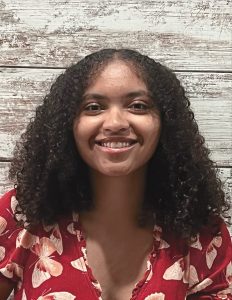
FFRF awarded Ashley $750.
By Ashley Jimmerson
I grew up as a biracial young woman in a Christian household where faith played a significant role in shaping my identity. It provided a sense of community, moral guidance and an explanation for the world’s complexities. However, as I embarked on my personal journey, I found myself straying from the path of religious conviction. Now, at the age of 19, I proudly identify as a nonbeliever, and I want to share the story of my journey to becoming “godless” and the personal advantages I have discovered along the way.
My departure from religious belief was not an overnight occurrence but a gradual process marked by moments of doubt and introspection. As I entered my teenage years, I began questioning the teachings I had previously accepted. I sought answers beyond blind faith, yearning for a deeper understanding of the world and my place in it. This quest for truth led me to explore different philosophies, scientific explanations and alternative perspectives on life.
Challenges were aplenty along this journey. One of the greatest hurdles I faced was the fear of disappointing my deeply religious parents. As a biracial individual, I already felt the weight of expectations from society, and straying from their religious path only added to the complexity of my identity. Engaging in open conversations about my evolving beliefs required immense courage, empathy and patience. Although our viewpoints differ, I am grateful that my parents have come to respect my decision and love me unconditionally.
Becoming “godless” has granted me a newfound sense of liberation and personal advantage. By embracing reason over faith, I have unlocked the freedom to think critically, question dogmas and shape my own moral compass. I am no longer bound by religious doctrines that restrict my beliefs, actions and relationships. This liberation has allowed me to explore a more holistic understanding of humanity, embracing diverse perspectives and engaging in open dialogue with others.
For BIPOC communities, the embrace of reason over faith can be particularly empowering. Historically, religion has been a tool of colonization and oppression, often used to justify racism, discrimination and cultural erasure. Breaking free from religious dogmas allows individuals within these communities to reclaim their own narratives, celebrate their cultural heritage, and challenge oppressive systems.
Reason becomes a powerful tool to dismantle harmful ideologies and advocate for social justice. Moreover, the separation of reason and faith offers an advantage in the realm of social policies. By basing decisions on evidence, critical analysis and empathy, we can create policies that are inclusive, equitable and rooted in the collective well-being of society. Reason enables us to evaluate the impact of social policies objectively, without the bias of religious dogmas that may perpetuate discrimination or deny certain rights based on personal beliefs.
Being “godless” does not imply a lack of morality or purpose. On the contrary, it allows me to find meaning in personal connections, humanistic values and the pursuit of knowledge. I cherish the opportunities to form authentic relationships, guided by empathy, compassion and respect for others. Without the constraints of religious doctrines, I am free to forge my own path, navigate the complexities of life and contribute to the betterment of society in a way that aligns with my values and convictions.
My journey to becoming a nonbeliever has been a transformative experience. It has been marked by moments of self-discovery, challenging conversations and the embrace of reason over blind faith. By stepping away from religious conviction, I have gained personal advantages, including liberation, critical thinking skills and the ability to advocate for social justice. For BIPOC communities and social policies, reason provides a powerful tool to challenge oppressive systems and foster inclusivity. I am grateful to be “godless.”
Ashley, 19, is from Shorewood, Ill., and attends Loyola University, where she is majoring in criminal justice/forensic science.
“I am dedicated to unraveling the mysteries of the human mind and contributing to the field of criminal justice,” Ashley writes. “Alongside my academic pursuits, I actively engage in volunteer work, particularly in organizations focused on mental health advocacy and promoting inclusivity. I aspire to pursue advanced degrees in forensic science and psychology, with the goal of combining research, clinical practice, and public service to make meaningful contributions to society.”
