
4th place — 2025 college essay contest: Elliot Graham
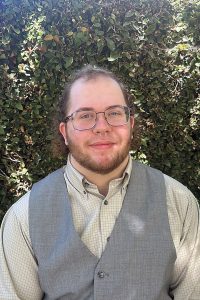
FFRF awarded Elliot $2,000.
By Elliot Graham
From a young age, I was taught that this world was just a temporary test, and that the real reward (or punishment) awaited us after death. Heaven was the ultimate goal. Earth was the waiting room. Something about this outlook never felt right, and, as I grew up, it became increasingly apparent that this worldview had devastating implications.
When we frame our lives around the belief that our time here is merely a test, a stop on the way to something better, then what reason do we have to invest in a planet we’re told doesn’t really matter? Why fight injustice here if perfect, divine justice awaits elsewhere? Belief in an afterlife, while comforting to some, becomes an excuse to dodge responsibility for the issues we face here and now. It allows us to look away, to disengage, to delay meaningful action in favor of passive hope. But this is the only world — the only life — that we are certain of, and no one is coming to save us. If we don’t act, no one will. And the consequences will be ours to live with.
This mindset is truly everywhere: In the face of climate change, a crisis that endangers ecosystems, communities and future generations alike, many still cling to the idea that our planet’s fate is out of our hands. How people approach climate issues is often deeply tied to their religious views: In a 2010 study by Pew Research, roughly 41 percent of surveyed Americans indicated that they believe Jesus Christ will return by the year 2050. Another study found that 56 percent of Americans “agree or mostly agree that God is in control of all Earthly events.”
These beliefs that God will soon return to restore the planet, or that the divine plan should not be intervened with, are inherently irresponsible as they foster complacency in addressing urgent environmental crises. When people place belief in a higher power to clean up the damage, they’re incredibly less likely to support transitions to renewable energy, or reforms to hold industries accountable and reduce emissions. In societies where religion holds sway, this passive worldview can snowball outward, influencing entire communities and governments until the window for effective action has slipped through our fingers.
The same can be said about inequality. Religious teachings too often emphasize suffering as virtuous, or frame being “better off” as a sign of blessings and divine favor. If hardship serves a spiritual purpose, why alleviate it? Likewise, if success is viewed as a blessing, what incentive remains for the affluent to challenge the systems that benefit them or extend support to those less fortunate?
This feeds into a dangerous moral logic that allows people to tolerate, or even justify, poverty and economic exploitation. With the interpretation of salvation as a personal, otherworldly pursuit, it becomes easy to neglect the collective good we could, and should, be building here.
Whether it’s climate denial framed as divine will, resistance to legitimate science based on religious doctrine, or fatalistic attitudes toward human suffering, these beliefs often stand in the way of practical solutions. They encourage patience where action is needed and faith where science offers real answers.
My rejection of religion and belief in an afterlife isn’t born from resentment or disillusionment, but from the genuine conviction that this life is enough. It’s real. It’s tangible, full of love, intricacy, and challenges that call for us to meaningfully engage with our shared home and fellow humans.
Earth is not a waiting room. It is not a rehearsal for eternity, but the stage on which our only real story unfolds.
Elliot, 21, attends California Polytechnic State University with plans to major in philosophy. Elliot writes: “I am deeply interested in exploring questions surrounding free will and moral responsibility. My academic journey is driven by a desire to understand how human agency, ethics, history and religion intersect, and I plan to pursue graduate studies in philosophy to further develop my research in this area. Outside of the classroom, I have a passion for book collecting and archival work.”
